
Elbow Pain Treatment in Kanata for Overuse Injuries That Will Not Go Away
Elbow pain is quietly one of the most debilitating injuries for active people. It interferes with gripping, pulling, pressing, typing, and almost every upper body movement you rely on throughout your training and your day.
It is also notoriously mismanaged. Rest helps temporarily. A brace takes the edge off. Cortisone provides short-term relief. But none of these things fix what is actually wrong. Elbow tendinopathies, whether lateral or medial, are degenerative tissue problems that require progressive loading to heal properly, not more passive care and more time off.
At Highlands Wellness, we get the diagnosis right, combine hands-on treatment to reduce your pain and restore movement, and apply the specific loading protocols that the evidence shows actually drive tendon recovery.
Who We Help
We treat elbow pain in active adults dealing with a range of presentations:
Lifters with lateral or medial elbow pain during pulling movements, rows, or grip-intensive work
CrossFit athletes with elbow pain during gymnastics movements, barbell cycling, or kettlebell work
Racquet sport players and golfers with classic tennis or golfer's elbow presentations
Tradespeople and desk workers with chronic elbow pain from repetitive upper limb loading
Anyone whose elbow pain has persisted despite rest, bracing, or a previous course of treatment
How We Treat Elbow Pain
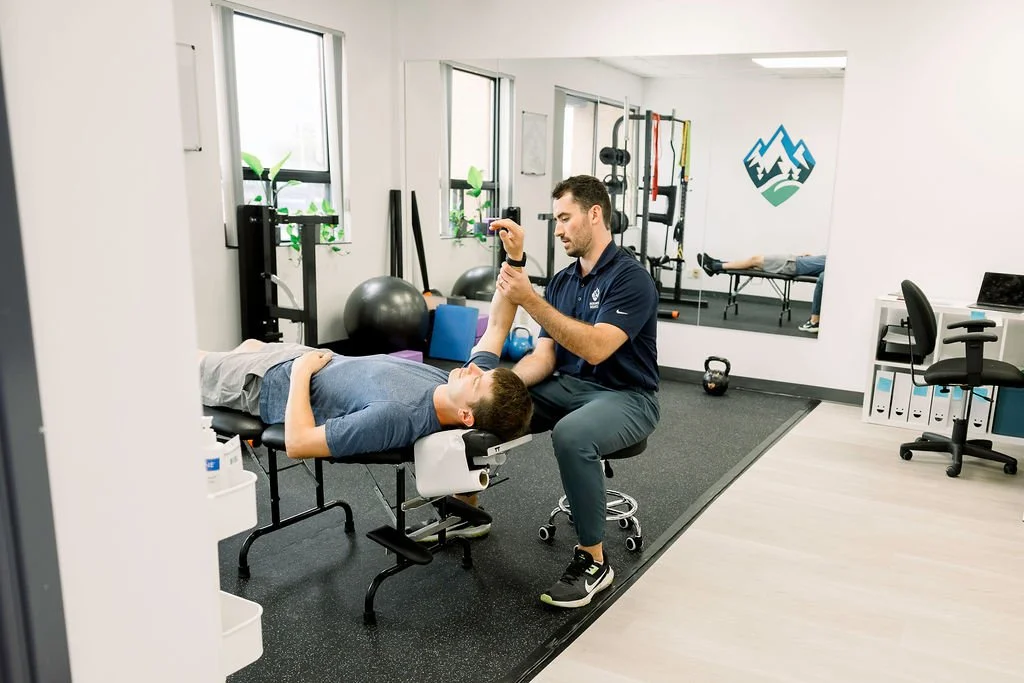
The elbow does not function independently from the wrist, shoulder, or thoracic spine. We assess the full chain alongside the local injury. Treatment may include:
Muscle Release Technique for forearm extensors, flexors, and the common tendon origins
IASTM/scraping to address tendon degeneration and fascial restriction at the lateral and medial epicondyle
Dry needling and electro-acupuncture into trigger points along the forearm and upper arm contributing to elbow pain
Chiropractic care including elbow, wrist, and cervical joint mobilization
Registered massage therapy for forearm and upper arm tension
Tendon loading protocols using eccentric and isometric exercise shown in the evidence to drive tissue remodelling
What to Expect
Your first visit includes assessment of the elbow, wrist, shoulder, and cervical spine. Elbow pain often has contributing factors higher in the chain that are missed when only the local area is treated. You leave with a specific loading protocol and a realistic timeline. Chronic tendinopathies take longer than acute ones but are very reliably treated with the right approach. Most patients see meaningful improvement within 6 to 8 visits.
Frequently asked questions.
-
Yes. Chronic tendinopathies respond well to targeted loading protocols. The timeline is longer than for an acute injury but full recovery is very achievable, even when symptoms have been present for years.
-
A brace can provide short-term load reduction during activity and is sometimes helpful in the early stages, but it does not address the underlying tissue problem. We will advise you on whether and when it is appropriate for your case.
-
Cortisone is effective at reducing inflammation and providing short-term relief but does not address tendon degeneration, which is the underlying problem in most persistent elbow pain. Loaded exercise is the treatment that drives actual tissue change.
-
Usually yes. We will identify which movements are loading the tendon excessively and give you specific modifications so your training can continue with appropriate adjustments.
-
Sometimes. Cervical nerve root irritation can refer symptoms into the forearm and elbow in a pattern that mimics lateral epicondylitis. We screen for this at your first visit to make sure we are treating the actual source.
Get started today.
Ready to stop managing your elbow pain and actually fix it? Book your first visit online or call us to claim a free 15-minute consultation. Most patients feel a meaningful difference within the first 6 to 8 visits.