
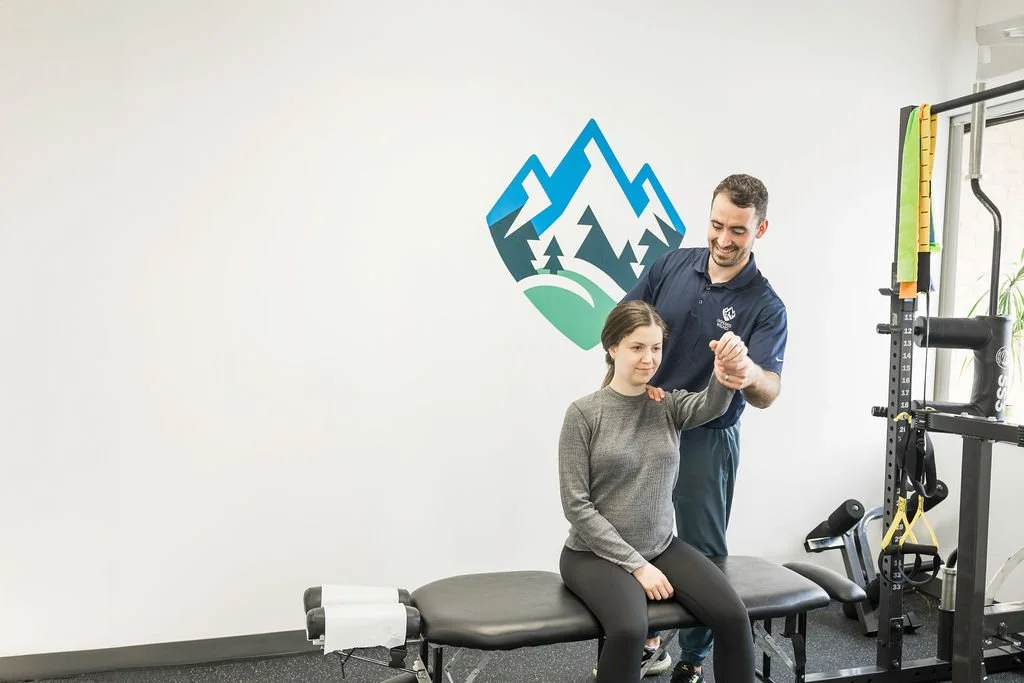
Shoulder Pain Treatment in Kanata — For Athletes, Lifters, and Active Adults
The shoulder is the most mobile joint in the body — which makes it one of the most injury-prone. Rotator cuff strains, impingement, AC joint injuries, frozen shoulder, and labral issues are among the most common things we treat at Highlands Wellness.
Shoulder pain rarely resolves on its own with rest alone. It usually needs a combination of hands-on treatment to reduce pain and restore movement, and targeted exercise rehab to rebuild the strength and coordination that protects it long-term.
Who we help
Lifters with shoulder pain during pressing, pull-ups, or overhead movements
Throwing athletes and racquet sport players
People with rotator cuff injuries, impingement, or frozen shoulder
Desk workers with chronic shoulder tension and restricted range of motion
How we help
Comprehensive shoulder assessment — movement, strength, and stability testing
Chiropractic treatment — joint mobilization, soft tissue therapy, electroacupuncture
Registered massage therapy for muscle guarding and tension
Progressive exercise rehab — rotator cuff strengthening, scapular control, load management, return to pressing and sport
What to expect
Your first visit includes assessment and treatment of your shoulder, thoracic spine, and neck with our chiropractors or massage therapists — movement testing, strength evaluation, and a complete history. You'll leave with a diagnosis and a clear plan, not just a 'come back next week.' Most patients see meaningful progress in 6-8 visits.
Frequently asked questions.
-
It depends on the severity and duration of your pain. Most acute injuries resolve in 6–8 visits. Chronic or recurring shoulder pain takes longer but is very treatable.
-
Not at all. Most of our patients see us because they have pain. Once they are out of pain and functioning well, care typically ends. Some patients have complicating factors such as old injuries, stressful or physical work environments that may cause recurring issues, and we usually offer some form of maintenance in these cases.
-
Often yes. We will help you use the right modifications to keep training. We’ll tell you what to load, what to avoid, and how to progress so you stay strong while recovering.
-
No. We can assess you clinically and determine whether imaging is necessary. Many shoulder injuries don't require it.
Helpful resources
Get started today.
Take action and embark on your journey to pain-free living.