
Chiropractor for Lower Back Pain in Kanata
Seeing a chiropractor for lower back pain makes sense when the pain has lasted more than a few days, keeps coming back, or is getting in the way of work, sleep or training. Most back pain comes from sore muscles and joints, and sometimes an irritated disc or nerve. It's rarely a sign of anything serious, even when it hurts a lot.
What causes most lower back pain?
Low back pain is one of the most common things I treat. In most cases the muscles and joints of the lower back are sore and sensitive. Sometimes a disc or nerve is involved, which can send pain into the buttock or down the leg.
It can be very painful, and a bad flare can stop you from tying your shoes. That's scary, so people get nervous and stop moving. The problem is that the activities they drop (walking, the gym, their sport) are often the things that help them feel better in the long run.
Who I see with back pain in Kanata
The most common patient I see is a desk worker who plays a sport on the weekend. They tweak something at the gym or in a game, and sitting all week keeps it irritated.
People do hurt themselves in the gym, but more often it happens around the house. Fall is busy for this. Raking leaves, cleaning up the garden and getting the yard ready for winter all add up, and once the snow comes, it's the driveway.
When should you see a chiropractor for lower back pain?
Book an assessment if:
The pain has lasted more than a few days and isn't easing.
It keeps coming back after yard work, lifting or long days at your desk.
It's affecting your sleep or stopping you from training.
Pain, tingling or numbness runs into your buttock or leg.
See your family doctor soon if you also have a fever, unexplained weight loss or a history of cancer, or if the pain started after a fall or car accident.
Go to emergency right away if you lose control of your bladder or bowels, have numbness in your groin or inner thighs, or have leg weakness that's getting worse. These can be signs of cauda equina syndrome, a rare but serious compression of the nerves at the base of the spine.
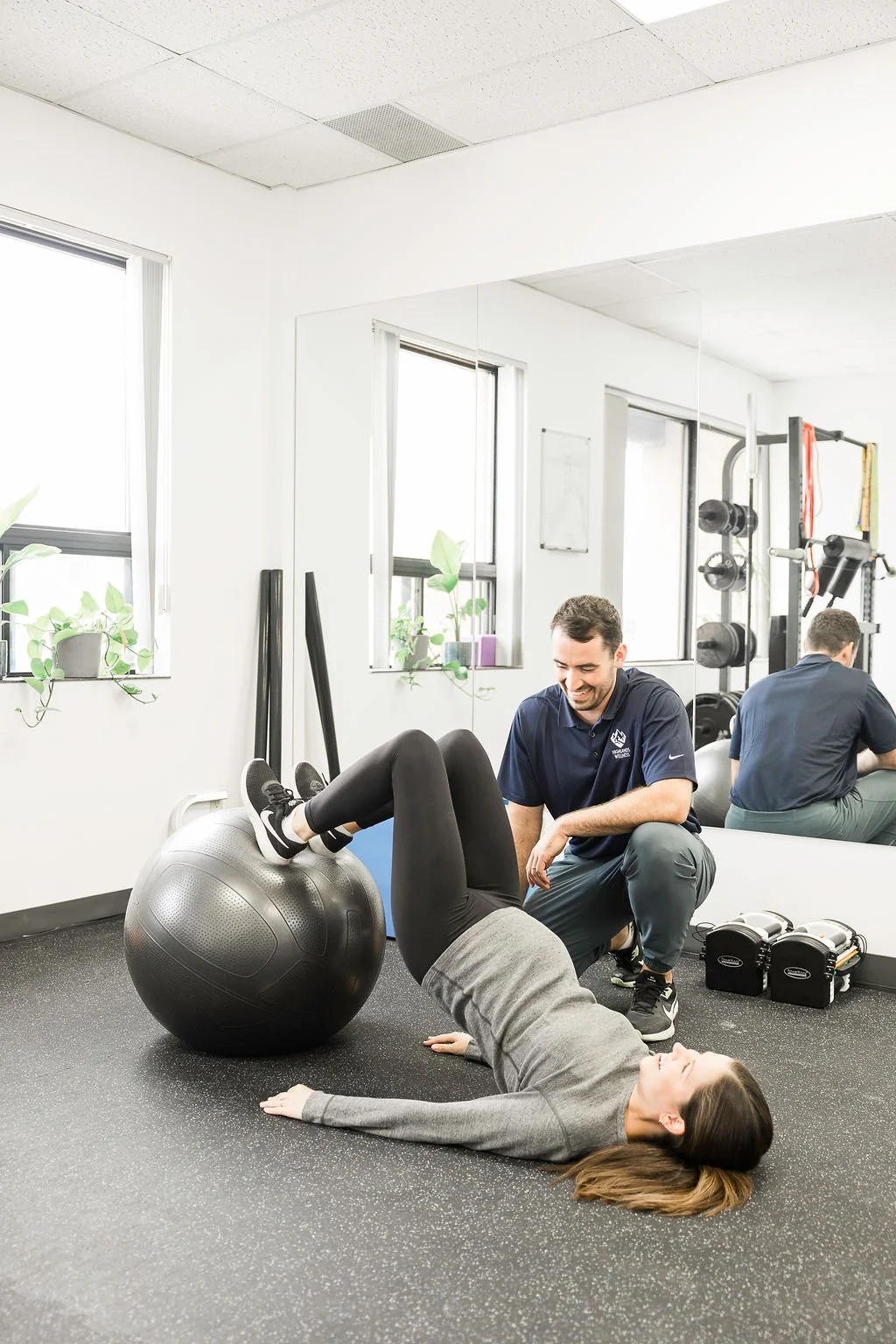
What treatment looks like at Highlands
At the first visit, we want you to leave knowing whether you need imaging or a referral, that you're safe, what your limits are right now and how to work within them to get back to what you want to do. Most people also walk out feeling a bit better.
Our approach is simple: calm the pain down, then build you back up.
To calm things down, our chiros use soft tissue therapy, Muscle Release Techniques (MRT, a hands-on technique for tight or irritated muscles), joint mobilization, spinal manipulation (the adjustment), acupuncture and taping.
Building you back up usually means strength and conditioning, plus one or two easy lifestyle changes. We don't try to change everything at once. It might be finding a more comfortable sleep position, replacing an old mattress or adjusting your workstation. For lifters, the fix is usually in how you're training right now. A change in load, volume or exercise choice often does more than adding new exercises.
We reassess every visit. Once you're past the painful phase, the exercises shift toward function. Our goal is to find the hardest thing you can do well and build from there.
Massage fits well alongside this. Our RMTs help reduce tension and settle down painful areas early on, and many of our patients keep regular massage as part of their maintenance, especially if they sit at a desk all day. In my experience, people who combine regular massage with chiropractic care and their home program tend to have fewer and milder flare-ups.
Back pain advice I disagree with
Bed rest. A day of taking it easy is fine, but staying in bed doesn't usually help, and gentle movement tends to speed things up.
Getting an MRI right away. Most people with low back pain don't need imaging. If your assessment points to something that does need it, we'll arrange it then.
"Your spine is out of alignment." The research doesn't support this. What I see in most patients is tissue that's sore, sensitive and a bit cranky, and our job is to calm it down.
What to do at home in the first week
The goal in week one is to get moving. Easy movement desensitizes sore muscles and joints and gets blood flowing to the area. Good starting points:
Short walks, 10 to 15 minutes, two or three times a day.
Cat-camel on your hands and knees, 10 slow reps.
Knee rocks on your back, knees bent, 10 each side.
Stay in a range that feels comfortable. Some soreness is fine. Pain that's sharp or getting worse means ease off.
Frequently Asked Questions
How long does lower back pain take to go away?
Most new episodes improve a lot within a few weeks. Back pain often comes back, though, which is why we focus on building strength and changing the habits that set it off.
Do I need an X-ray or MRI for lower back pain?
Usually not at first. Imaging is useful when the assessment points to a specific problem or when symptoms aren't improving as expected.
Should I keep going to the gym with back pain?
Usually, yes, with changes. We'll adjust your load and exercise choices so you can keep training while your back settles down.
Should I use ice or heat?
Use whichever feels better. Many people find heat more comfortable for a stiff, tight back.
If your back has been sore for more than a few days, or it keeps flaring up after yard work or the gym, book an assessment with Dr. Josh Kiely or Dr. Stephanie Bonneau at our Kanata clinic.
